


Tour de France 2026: Extreme heat & climate adaptation
Essay
For a long time, the Tour de France focused primarily on traditional environmental issues: waste, littering and the question of how to minimise the impact of an audience numbering in the millions. These challenges remain – but climate change is broadening the agenda. Today, it is no longer just a matter of reducing the sport’s impact on the environment, but also of adapting the sport to a changing environment.
The 2026 Tour de France highlights this shift. Extreme heat has become a tangible risk to the event: due to the highest heat warning level in Corrèze, the 9th stage was shortened by 30 kilometres at short notice. For the riders, cooling vests, ice and additional hydration are now part of the measures taken to reduce the physical strain caused by extreme heat.
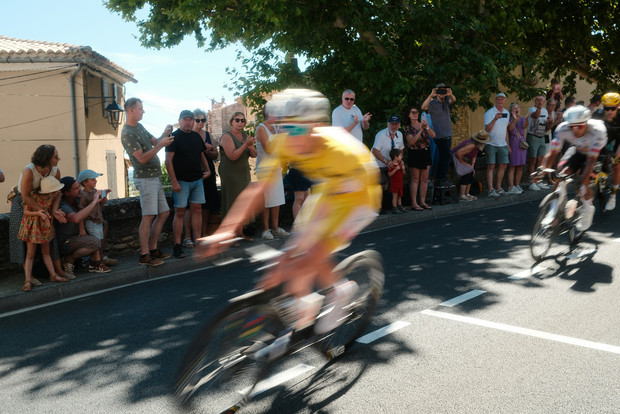
But climate adaptation does not stop with the professionals. Spectators, too, are exposed to heat-related risks when they wait along the route for long periods in direct sunlight and without sufficient shade. Access to drinking water, shaded areas, heat warnings and medical care is therefore just as important as the protection of volunteers and staff.
A study published in *Scientific Reports* in 2026, covering 50 years of the Tour de France, confirms the long-term trend: heat stress during the French summer has increased.
The tour thus serves as a prime example of how the requirements for sustainable sporting events are changing: from littering to climate adaptation – and from reducing one’s own ecological footprint to greater climate resilience. Cooling, water, shade, and flexible route, timing and emergency plans are becoming key components of sustainable event planning.
Sources: Tour de France / A.S.O. (2026), Mitteilung zur Anpassung der 9. Etappe aufgrund der Hitzewarnstufe; Cvijanovic et al. (2026), Scientific Reports, „Increasing heat stress at the Tour de France“.