


SWIM RACE DAYS – SV WESTFALEN DORTMUND




REALISATION
At the Swim Race Days, the sustainability concept was put into practice by deliberately opting for environmentally friendly materials and resource-efficient processes. For example, old promotional material such as event banners was not simply disposed of, but recycled — resulting in 75 sturdy bags that were given a new lease of life.
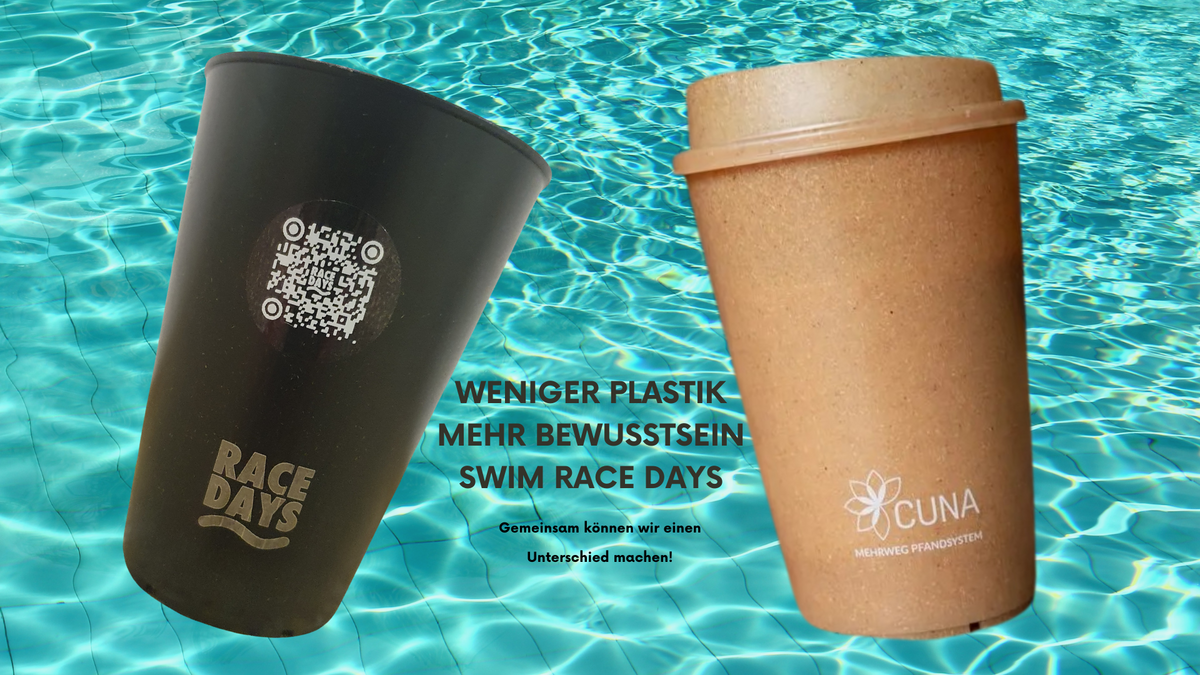
Furthermore, single-use plastic was avoided at the event. Instead, reusable cups and bowls made from bio-based, sustainable materials were used. The products used consist of 90–95 per cent renewable raw materials, which are obtained as a by-product of sugar cane production. The material also sequesters around 1.5 kg of CO₂ equivalents per kilogram. Combined with the deposit-return scheme in place, this further improves the carbon footprint, as the reusable products can be reused many times. They are dishwasher-safe and can be recycled at the end of their life cycle, thereby promoting a closed-loop material cycle.
The use of reusable products saves around 320 disposable cups and 160 disposable plates per event. This equates to a total of 480 disposable products avoided per event. Extrapolated over a ten-year period, this results in a saving of around 19,200 disposable products.
In addition, organisational measures were implemented: paper consumption was reduced, for example by using digital minutes instead of printed results, QR codes instead of printed registration and results lists, and fewer printed documents overall.
The event thus combines environmental, organisational and material-related approaches to embed sustainability at multiple levels.

BACKGROUND
The Swim Race Days in Dortmund — initiated by SV Westfalen Dortmund — are deliberately organised as a sporting event with a focus on sustainability. With around 650 participants on a regular basis, the event demonstrates that sustainable event organisation and performance-oriented competitive sport can be successfully combined. The aim is to reduce the environmental footprint and to embed resource and environmental awareness into the organisation of the event. For this commitment, the club was awarded second place in the ‘Sustainable Sports Clubs’ competition organised by WestDerby Zukunft.
| Impact | ||||||||||
| Time effort | ||||||||||
| Personnel effort | ||||||||||
| Budget | ||||||||||

CHALLENGES
- Additional effort involved in planning and organising sustainable materials and processes.
- Reliance on external partners and service providers for sustainable solutions.
- The need to raise awareness amongst participants and visitors about reusable and recycling schemes and to encourage their adoption.
- Logistical effort involved in the collection, cleaning and return of reusable materials.

Further information can be found on the SV Westfalen Dortmund website.
Further information on the sustainability strategy
Contact:
Uwe Weckelmann and Naomi Dorn: nachhaltigkeit@svwestfalen.de